Assessing Cute Simple: A Practical Look at a Playful Display Font
In the search for the right typeface, creators often face a familiar tension: finding a font that feels friendly and approachable without sacrificing clarity or versatility. Cute Simple emerges as a display font designed to sit precisely at this intersection. It presents itself as a solution for projects that demand a soft, welcoming aesthetic combined with the functionality needed for modern, digital-first design workflows. This article examines the characteristics of Cute Simple, evaluates its strengths and tradeoffs, and helps determine where it fits within a broader typographic toolkit.
Core Characteristics and Design Philosophy
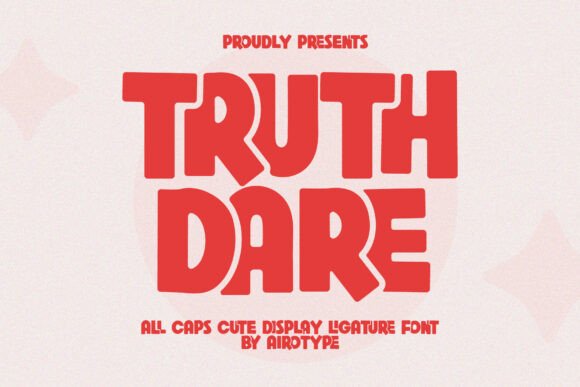
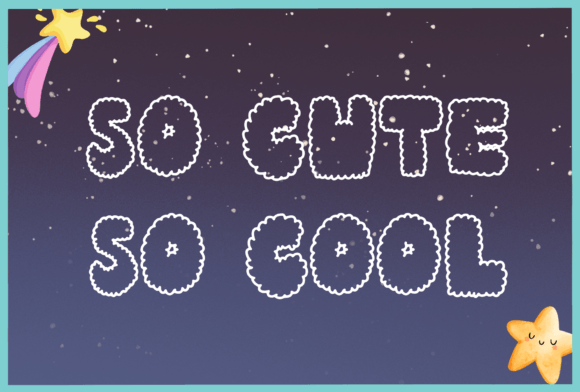
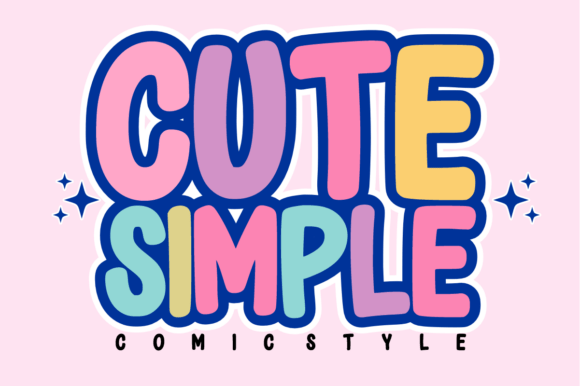
Cute Simple is categorized as a display font, meaning its primary purpose is for headings, titles, and short bursts of impactful text rather than for body copy. Its defining features are its clean, rounded, and chunky letterforms. This construction aims for high legibility at larger sizes while cultivating an "irresistibly adorable" visual personality. The aesthetic is often described as "sweet clean," suggesting a balance between playful informality and a minimalist, uncluttered presentation. This positions it as a versatile middle ground between overly whimsical script fonts and sterile, geometric sans-serifs.
The font includes a full uppercase alphabet, basic numerals, and essential symbols. This limited character set is a deliberate design choice, focusing on the core elements needed for impactful, short-form messaging. It is optimized for performance on cutting machines like Cricut and Silhouette, indicating that its paths are clean and designed for smooth vector rendering. Furthermore, its compatibility spans popular design platforms such as Canva and Procreate, as well as standard operating systems like Windows and Mac, ensuring it can be integrated into common creative processes.
Evaluating Strengths and Ideal Applications
The primary strength of Cute Simple lies in its specific aesthetic niche. It excels in projects where a personal, hand-crafted feel is desired, but without the unpredictability or potential illegibility of actual handwriting. This makes it particularly effective for several defined use cases.
- Educational and Classroom Materials: For teachers creating posters, name tags, or worksheets, the font's clarity and friendly demeanor can create an inviting learning environment that is easy for children to read.
- Children's Products and Apparel: Its chunky, rounded forms translate well to items like T-shirts, hoodies, and onesies, where the text needs to be durable, clear, and visually appealing to a young audience.
- Personalized Labels and Organization: For pantry labels, planner stickers, or organizational decals, the font provides a clean and cheerful aesthetic that avoids the harshness of more industrial label fonts.
- Party and Event Design: Invitations, banners, and party favors benefit from its sweet style, which can convey celebration and warmth without being overly themed or childish.
In these scenarios, Cute Simple can be a strong choice because it directly addresses the need for a specific mood—playful yet clean—while offering the practical benefits of digital compatibility and cutting optimization.
Considering Tradeoffs and Limitations
No font is universally perfect, and understanding the tradeoffs of Cute Simple is crucial for an informed decision. Its design inherently limits its utility in certain contexts.
- Limited Formality: The very qualities that make it charming—its chunky weight and rounded edges—render it unsuitable for projects requiring a serious, corporate, or highly formal tone. For a law firm's branding or an academic journal, its aesthetic would be inappropriate.
- Reduced Effectiveness at Small Sizes: As a display font optimized for impact, it may lose legibility and its intended character when used for small body text or fine print. Its design is not intended for extended reading passages.
- Character Set Constraints: The inclusion of only uppercase letters, numbers, and basic symbols means it cannot be used for projects requiring lowercase letters, extensive punctuation, or multilingual support. This is a significant limitation for complex typographic work.
- Aesthetic Specificity: While "sweet" is a virtue in many projects, it can become a limitation if overused or applied to contexts where a more neutral or sophisticated tone is needed. It risks feeling saccharine if not paired thoughtfully with other design elements.
Therefore, Cute Simple is not a replacement for a workhorse sans-serif or serif font family. It is a specialist tool for injecting personality into specific, targeted applications.
Comparison with Alternative Approaches
When considering Cute Simple, it's useful to compare it to broader categories of fonts one might use for similar purposes.
Versus Traditional Script Fonts
Script fonts offer a more authentic handwritten feel but often come with significant legibility challenges, especially in all-caps formats or when used for cutting. They can also veer into overly formal (copperplate) or chaotic (grunge) territory. Cute Simple provides a more controlled, consistently legible alternative that retains a hand-drawn quality without the associated readability issues.
Versus Geometric Sans-Serifs
Clean, modern sans-serifs (like those in the Futura or Gotham families) offer superb legibility and neutrality. However, they can feel cold or impersonal for projects targeting children or aiming for a cozy, personalized feel. Cute Simple adds warmth and personality where a standard sans-serif might feel sterile.
Versus Other "Cute" or Rounded Fonts
The market includes many fonts with rounded terminals and soft edges. What distinguishes Cute Simple is its emphasis on "clean" alongside "cute." Some rounded fonts become overly bubbly or cartoonish, limiting their use. Cute Simple's chunky yet minimalist forms aim for a more contemporary, versatile sweetness that can bridge playful and professional contexts more effectively, such as in modern branding for a family-friendly business.
Making the Decision: Is Cute Simple the Right Choice?
Determining whether to use Cute Simple depends on a clear assessment of your project's goals, audience, and required tone.
Choose Cute Simple when:
- Your project explicitly calls for a friendly, approachable, and slightly playful aesthetic.
- You are working with short-form text like headlines, labels, or titles.
- Your primary output involves digital design (Canva, Procreate) or physical cutting (Cricut, Silhouette).
- You need a font that is immediately legible without extensive kerning adjustments.
- The context is informal, celebratory, educational, or child-oriented.
Consider other options when:
- The project requires a formal, corporate, or minimalist-neutral tone.
- You need extensive typographic features like lowercase letters, ligatures, or numerous weights.
- The text will be used for long paragraphs or at very small point sizes.
- The design language calls for sharp, angular, or highly geometric forms.
Ultimately, Cute Simple is a valuable asset in a designer's toolkit when its specific strengths align with project needs. It offers a reliable way to achieve a sweet, clean, and stylish look for appropriate applications. By evaluating your project's requirements against the font's inherent characteristics and limitations, you can make a practical decision that enhances your design's effectiveness and appeal.