Streamlining Your Creative Process with the Elda Maria Font
In the daily rhythm of design and content creation, the choice of typography is not merely an aesthetic preference; it is a functional decision that impacts workflow efficiency, brand consistency, and the final quality of the output. For professionals ranging from freelance graphic designers to marketing managers and small business owners, finding a font that balances beauty with utility is essential. The Elda Maria typeface, designed by Darly Ospina Morales, represents a specific solution to a common workflow challenge: the need for a versatile, legible, and emotionally resonant script font that integrates seamlessly into complex design systems.
Understanding where Elda Maria fits within your broader creative process allows you to leverage its strengths effectively. It is not just a decorative element to be added at the end of a project; rather, it is a foundational asset that can guide the mood and direction of a design from the earliest planning stages. By treating typography as a strategic tool rather than a final flourish, creators can significantly reduce revision cycles and improve the coherence of their visual communications.
Understanding the Functional Role of Elda Maria
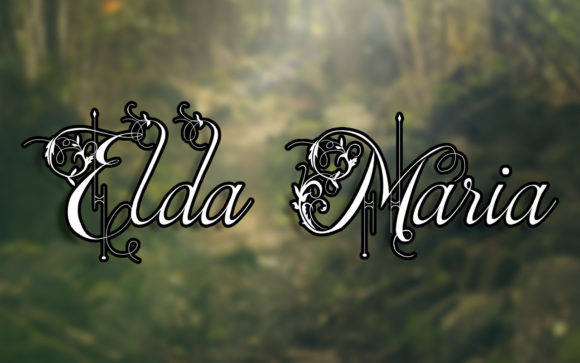
At its core, Elda Maria is a script font characterized by its flowing, connected letterforms and balanced proportions. However, to use it effectively in a professional setting, one must look beyond its visual appeal. The font’s design features—such as its consistent baseline, clear character separation, and natural rhythm—make it highly legible at various sizes, a critical factor for digital and print applications alike.
In a typical design workflow, typography selection usually occurs during the conceptualization or asset gathering phase. When you introduce Elda Maria early in this stage, you establish a specific tone. Its elegant yet approachable style makes it suitable for projects that require a personal touch without sacrificing professionalism. Think of it as a tool that bridges the gap between formal corporate communication and intimate, handwritten notes.
Compatibility and Integration with Design Tools
A practical consideration for any font is its compatibility with the software ecosystem you use daily. Elda Maria is delivered in standard formats (typically OTF or TTF), ensuring it installs smoothly on both macOS and Windows operating systems. This universal compatibility means it functions reliably within major design suites like Adobe Creative Cloud (Photoshop, Illustrator, InDesign), Affinity Designer, Canva, and even standard office productivity software like Microsoft Word or Google Docs (via upload).
For teams, integrating Elda Maria involves more than just installation. It requires establishing usage guidelines. Because it is a script font with distinct stylistic features, it should be paired carefully with neutral sans-serif or serif typefaces to maintain readability. A common workflow practice is to define a primary typeface for body text and reserve Elda Maria for headlines, pull quotes, or specific call-to-action elements. This hierarchy ensures the font enhances the design without overwhelming the viewer.
Practical Implementation Across Different Projects
The versatility of Elda Maria allows it to be applied across a wide range of creative and business projects. Its utility extends beyond static design into dynamic content creation and branding exercises. Here is how different professionals can integrate this font into their specific workflows.
For Branding and Identity Design
When developing a brand identity, the logo and wordmark are central elements. Elda Maria is particularly effective for brands that wish to convey elegance, creativity, or a personal connection with their audience. This includes boutique businesses, lifestyle blogs, wedding planners, and artisanal product lines.
Workflow Example:
- Discovery Phase: Identify the brand’s core values. If “authenticity” or “craftsmanship” is a key value, Elda Maria becomes a strong candidate for the logo typeface.
- Prototyping: Use the font to create several logo variations. Test it in monochrome to ensure the letterforms hold up without color distraction.
- Application: Once the logo is finalized, extend the font to secondary brand assets like business cards, packaging labels, and email signatures to maintain consistency.
For Marketing and Content Creation
Marketers and content creators often struggle to make static text engaging. In the realm of social media graphics, email headers, or lead magnets, Elda Maria can serve as a visual anchor. Its flowing nature draws the eye, making it ideal for highlighting key messages or emotional appeals.
Consider a content calendar workflow. When designing Instagram templates, you might pre-set Elda Maria for quote graphics. By standardizing this choice, you eliminate the daily decision fatigue of choosing fonts, allowing you to focus on the message. The font’s balanced characters ensure that even when scaled down on mobile screens, the text remains legible and aesthetically pleasing.
For Editorial and Publishing Layouts
In editorial design, such as magazines, e-books, or reports, typography dictates the reading experience. While Elda Maria is not intended for long-form body text due to its script nature, it excels in decorative roles. It can be used for chapter titles, drop caps, or pull quotes to break up the monotony of standard text blocks.
When working with layout software like InDesign, you can create character styles based on Elda Maria. This allows for consistent application throughout a document. For instance, defining a style named “Accent Script” that uses Elda Maria in a specific color and size ensures that every chapter heading looks uniform, streamlining the production process and reducing errors.
Optimizing Workflow and Efficiency
Efficiency in creative work is about reducing friction. A font that requires constant kerning adjustments or fails to render correctly across platforms introduces friction. Elda Maria is designed with well-balanced characters, which means less time spent manually adjusting spacing between letters.
For freelancers and agencies, time is a direct commodity. By adopting Elda Maria as a standard part of your font library for specific project types, you create a reusable asset. You can develop templates—whether for client proposals, social media kits, or website mockups—that already incorporate the font. When a new project begins that fits the aesthetic profile, you simply load the template, saving hours of setup time.
Quality Control and Final Output
Before finalizing any project, quality control is essential. When using Elda Maria, pay attention to the following during your review process:
- Scalability: Test the font at the smallest size it will appear in your design (e.g., a mobile caption or a footnote). Ensure the details remain clear.
- Color Contrast: Script fonts can sometimes lose definition against busy backgrounds. Check that there is sufficient contrast between the font color and the background.
- File Export: If creating a PDF or web asset, ensure the font is embedded or converted to outlines (in vector software) to prevent rendering issues on other devices.
Long-Term Use and Adaptability
Trends in design come and go, but a well-crafted font retains its value. The timeless elegance of Elda Maria suggests it will remain relevant for years. As your projects evolve, the font can adapt. It works equally well on a minimalist website as it does on a textured, vintage-style poster.
For educators and course creators, Elda Maria can be used to create a warm, inviting atmosphere in learning materials. Using it for slide titles or section dividers in a presentation can make the content feel less clinical and more human, potentially increasing student engagement.
Ultimately, integrating Elda Maria into your toolkit is about enhancing your ability to communicate visually with clarity and style. By understanding its characteristics and applying it thoughtfully within structured workflows, you ensure that this asset by Darly Ospina Morales serves not just as decoration, but as a functional component of your professional output. It is a tool that, when used correctly, makes your creative ideas come alive with minimal effort and maximum impact.