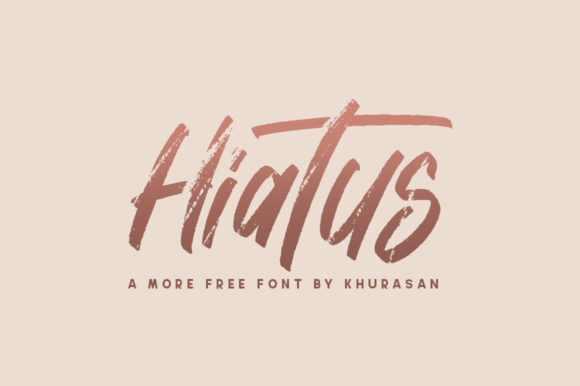
Integrating the Hiatus Font into Your Professional Design Workflow
Defining the Role of Modern Brushed Handwriting
In the realm of digital design and branding, typography acts as the voice of the visual message. When a project calls for a tone that is personal, approachable, yet undeniably polished, the Hiatus font emerges as a specific solution. It is not merely a collection of letters; it is a modern brushed handwritten typeface characterized by its casual feel and contemporary aesthetic. Understanding where Hiatus fits within the broader ecosystem of design assets is the first step toward effective implementation. Unlike rigid serif fonts used for body text or stark sans-serifs for UI elements, Hiatus occupies the "accent" category. It is designed to inject personality into a layout without sacrificing legibility.
For professionals ranging from marketers to small business owners, the challenge often lies in bridging the gap between a corporate identity and a human connection. Hiatus serves as that bridge. Its brushed texture mimics the organic imperfections of hand-lettering, which subconsciously signals authenticity to the viewer. However, because it is a modern interpretation, it avoids the chaotic illegibility sometimes associated with grunge or loose script fonts. This balance makes it a viable asset for professional workflows where clarity is just as important as style.
The Strategic Selection Phase: When to Choose Hiatus
The integration of Hiatus begins long before the design software is opened; it starts at the planning and strategy stage. When defining the visual direction of a brand or a specific campaign, creators must assess the emotional resonance required. If the goal is to convey authority and neutrality, Hiatus is likely the wrong choice. However, if the objective involves advertising a lifestyle product, designing a logo for a boutique café, or creating social media assets for a personal brand, this font becomes a strong contender.
Matching Font to Audience
Consider the demographic profile of your end-user. For audiences aged 20 to 50 who value creativity, authenticity, and a "cool" aesthetic, the Hiatus font aligns perfectly. It speaks to the freelancer who wants to appear approachable, the educator looking to break down barriers with students, or the entrepreneur launching a direct-to-consumer product. During the mood board creation phase, placing Hiatus alongside your imagery helps determine if the typographic voice matches the visual narrative. If the mood board feels too sterile, Hiatus can add the necessary warmth.
Technical Integration and Pairing Strategies
Once the decision to use Hiatus is made, the process shifts to technical execution. A font does not exist in a vacuum; it interacts with other typographic elements. One of the most common implementation errors is using a handwritten font for large blocks of text. Hiatus is best utilized for headlines, sub-headers, pull quotes, or call-to-action buttons. It is a display font, meaning it is optimized for impact at larger sizes.
Creating Hierarchy with Contrast
To ensure the design remains functional, Hiatus must be paired with a highly legible body font. A clean sans-serif font (such as Helvetica, Open Sans, or Roboto) often provides the best contrast. The casual, organic curves of Hiatus stand out distinctly against the geometric precision of a sans-serif. This interaction creates a clear visual hierarchy: the viewer's eye is drawn to the handwritten header (the emotional hook), and then flows naturally into the standard body text (the informational details). This workflow ensures that the "cool look" of the font does not compromise the user's ability to scan and read the content efficiently.
Practical Application Across Business Assets
The versatility of Hiatus allows it to be deployed across various stages of a project lifecycle. Its application changes slightly depending on the medium, requiring the designer to adapt the usage rules accordingly.
Branding and Identity Systems
When used in logo design, Hiatus provides an immediate sense of bespoke craftsmanship. It suggests that the brand is creative and individualistic. However, for long-term use, scalability is a concern. While Hiatus works beautifully on a website header or a storefront sign, it may lose legibility on very small applications like favicon icons or intricate embroidery on uniforms. Therefore, a robust branding workflow involves creating a secondary logomark or wordmark for small-scale applications while keeping Hiatus for primary hero usage.
Advertising and Social Media
In the fast-paced environment of social media marketing, stopping the scroll is paramount. The "cool look" of Hiatus breaks the monotony of standard corporate fonts. It is particularly effective for Instagram Stories, quote cards, or promotional banners. When implementing this in a workflow, a marketer might create a template library where Hiatus is locked into the headline layer. This ensures brand consistency across dozens of posts while allowing the imagery to change. The font acts as a recognizable anchor for the brand's voice.
Product Packaging and Merchandise
For physical products, texture plays a significant role. The brushed aesthetic of Hiatus translates well to print, especially on matte finishes or textured cardstock. It evokes a tactile quality that digital screens struggle to replicate. When preparing files for print, it is crucial to outline the font in the final artwork to prevent rendering errors. This technical step ensures that the casual, flowing nature of the Hiatus script remains intact from the digital file to the physical product.
Workflow Optimization: Preparation and Quality Control
Integrating a specific font like Hiatus requires a standardized process to maintain efficiency. If you are working within a team or handing off assets to a client, documentation is key.
Style Guides and Documentation
If Hiatus is selected as part of a brand identity, it must be codified in a style guide. This document should specify exactly where the font is permitted (e.g., "Headlines only") and where it is prohibited (e.g., "Never use for body copy"). It should also define the tracking (letter spacing) and leading (line height) settings, as handwritten fonts often require manual adjustment to look natural. By pre-defining these parameters, you prevent the font from being misused by other team members who may not understand its specific characteristics.
File Management and Licensing
A professional workflow demands attention to organization. When downloading Hiatus, the file should be immediately installed across all relevant workstations and added to the central asset library. Furthermore, verifying the licensing agreement is a critical compliance step. Ensure the license covers the intended use cases—whether it is for a client's logo, a print-on-demand merchandise line, or web embedding. Keeping these administrative tasks organized prevents legal headaches and project delays later in the process.
Adapting to Different Platforms
The usability of Hiatus extends to various software environments, but each platform requires slight adjustments.
- Adobe Creative Cloud: In Illustrator or Photoshop, utilize the OpenType features often included with premium fonts like Hiatus. These may include alternate characters or ligatures that enhance the handwritten feel by varying the letter connections.
- Web Development: When using Hiatus on a website, convert the font to WOFF2 format for faster load times. Use it sparingly to avoid performance lags; a slow-loading headline font can negatively impact SEO and user retention.
- Presentation Software: In tools like Keynote or PowerPoint, ensure the font is embedded in the presentation file. If presenting on a machine that does not have Hiatus installed, the software will substitute a default font, destroying the intended aesthetic.
Long-Term Consistency and Evolution
Design trends evolve, but a well-chosen typeface can endure. The "modern" aspect of Hiatus gives it longevity, but it requires consistent application to build brand equity. Over time, the audience begins to associate the specific curves and flow of Hiatus with the brand's identity. This recognition is the ultimate goal of any branding workflow.
However, creators should periodically review their typography choices. As a business grows, the "casual feel" of a font like Hiatus may need to be balanced with more authoritative elements if the company expands into new, more formal markets. The implementation process is not static; it involves reviewing the font's performance against current business goals. If the font still resonates with the target demographic and supports the message, it remains a valuable asset in the designer's toolkit.
Ultimately, Hiatus