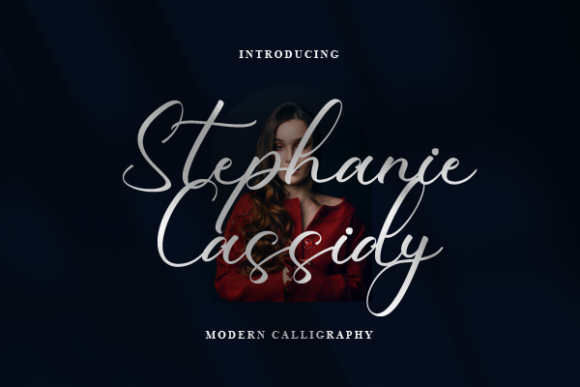
Stephanie Cassidy: Evaluating a Delicate Script for Your Next Creative Project
In the vast ecosystem of digital typography, choosing the right font is rarely a matter of simply picking the "prettiest" option. It is a strategic decision that impacts readability, brand personality, and technical performance. Among the myriad of script fonts available, Stephanie Cassidy has emerged as a notable contender. Described as a delicate and stylish script, it promises to deliver a specific aesthetic that many designers seek. However, determining if it is the right tool for your workflow requires a deeper look at its characteristics, strengths, and the scenarios where it truly shines compared to other typographic approaches.
Understanding the Aesthetic Identity
At its core, Stephanie Cassidy is designed to emulate the fluidity of natural handwriting while maintaining a high level of elegance. Unlike rigid serif or sans-serif fonts, this script typeface focuses on flow and connection. The "delicate" descriptor is accurate; the strokes are generally lighter, and the letterforms feature intricate loops and swashes. This creates a visual tone that feels intimate, personal, and sophisticated.
When analyzing the visual weight of Stephanie Cassidy, it falls into the category of display scripts. This means it is intended for short bursts of text—headlines, logos, or accents—rather than long-form paragraphs. The distinctiveness lies in its ability to look "expensive" or "hand-crafted" without being illegible. For designers working on projects that require a human touch, such as wedding invitations or boutique branding, this font offers a specific flavor of sophistication that mechanical fonts cannot replicate.
Practical Applications and Use Cases
The utility of a font is defined by where it fits best. Based on its design attributes, Stephanie Cassidy is particularly well-suited for specific creative avenues. It is not a universal workhorse; rather, it is a specialized instrument.
Branding and Logo Design
For businesses in the lifestyle, beauty, or luxury sectors, the logo sets the immediate tone. Stephanie Cassidy offers a solution for brands that want to convey approachability mixed with high-end appeal. For example, a boutique bakery, a high-end florist, or a lifestyle coach could use this font to establish a brand identity that feels personal and curated. However, designers must consider scalability. Script fonts with thin, delicate strokes can sometimes lose legibility when scaled down very small on business cards or scaled up very large on signage.
Photography and Watermarking
Photographers often look for watermarks that do not distract from the image but still assert ownership. Because of its light weight and flowing nature, Stephanie Cassidy works well as a watermark overlay. It blends into the composition rather than blocking it. Similarly, for photo overlays—such as quotes placed over lifestyle images—the stylish nature of the script complements visual storytelling without clashing with the subject matter.
Event Stationery and Packaging
The "special events" category is perhaps where this font finds its most natural home. Wedding invitations, save-the-dates, and event signage rely heavily on script fonts to set a romantic or celebratory mood. Stephanie Cassidy provides the necessary flair for these projects. In product packaging, particularly for handmade goods, labels, or cosmetics, it can add a layer of artisanal quality that suggests the product inside is crafted with care.
Comparing Script Styles: Where Stephanie Cassidy Fits
To make an informed decision, it is helpful to understand how Stephanie Cassidy compares to broader categories of script fonts. Not all scripts are created equal, and the differences matter depending on the project requirements.
Formal vs. Casual Scripts
Script fonts generally exist on a spectrum from formal to casual. Formal scripts (often based on 17th and 18th-century penmanship) are structured, upright, and highly ornate. Casual scripts look more like modern handwriting and can be messy or energetic. Stephanie Cassidy sits closer to the elegant end of the spectrum but retains enough softness to avoid looking stuffy. It is less rigid than a traditional copperplate script but more structured than a messy brush font. This middle ground is a significant strength, offering versatility for projects that need to look professional yet approachable.
Tradeoffs: Style vs. Legibility
The primary tradeoff with any delicate script, including Stephanie Cassidy, is legibility. Highly stylized letters, particularly capital letters with elaborate swashes, can be difficult to read at a glance. If the primary goal of the text is to convey critical information quickly (like a road sign or a safety warning), this font is the wrong choice. However, if the goal is emotional impact or aesthetic decoration, the tradeoff favors style. When using Stephanie Cassidy, it is often necessary to increase the letter spacing (tracking) or font size to ensure the viewer can decipher the words without squinting.
Technical Considerations and Limitations
Beyond aesthetics, practical factors play a role in font selection. When evaluating Stephanie Cassidy, designers should consider the technical environment in which the font will live.
Digital vs. Print Performance
On high-resolution screens, Stephanie Cassidy renders beautifully, showing off the fine details of its strokes. However, on lower-resolution devices or small mobile screens, those delicate lines can break up or become muddy. In print, the paper stock matters. A rough, textured paper might absorb the ink and cause the thin strokes to disappear, whereas a smooth, coated stock will preserve the font's elegance. It is always recommended to test print a sample before committing to a large run of labels or stationery.
Licensing and Alternatives
When choosing Stephanie Cassidy, it is also worth considering the licensing model and the availability of similar alternatives. While it offers a distinct look, the market for elegant scripts is crowded. Some alternatives might offer more extensive character sets, including additional language support or unique ligatures (special character combinations). Some fonts in this category might offer a "rough" or "distressed" version for a more vintage look, which Stephanie Cassidy may not possess. If a project requires a massive family of weights (bold, light, regular), a script font is rarely the answer, and a geometric sans-serif would be a better companion.
Making the Decision: Is It the Right Choice?
Deciding whether to use Stephanie Cassidy comes down to a simple alignment of project goals and font capabilities. It is the right choice when the project demands a feminine, delicate, or luxurious aesthetic. It is ideal for short-form text where emotional resonance is more important than raw data transfer.
However, readers should look elsewhere if they are designing for accessibility-first environments, technical documentation, or brands that require a bold, aggressive, or ultra-modern voice. For body text, Stephanie Cassidy is not suitable; it should be paired with a clean, neutral sans-serif or serif font for paragraphs to ensure readability.
Ultimately, Stephanie Cassidy is a powerful tool in a designer's kit when used correctly. By understanding its strengths in branding, photography, and event design—and acknowledging its limitations in legibility and technical rendering—you can make a balanced decision that enhances your project's visual narrative without compromising functionality.