Strategic Gratitude: How to Leverage Thanksgiving for Long-Term Business Value
Moving Beyond the Holiday: Thanksgiving as a Strategic Pillar
For professionals, entrepreneurs, and creators, Thanksgiving often represents a chaotic pause—a rush to finish projects before the weekend or a frantic push for Black Friday sales. However, viewing Thanksgiving merely as a date on the calendar is a missed strategic opportunity. When approached with intention, the concept of Thanksgiving becomes a powerful framework for decision-making, stakeholder management, and brand positioning. It is not simply about the turkey and the trimmings; it is about the deliberate practice of acknowledging value, which is a critical component of sustainable success.
In the professional sphere, gratitude is often mistaken for a "soft skill" that lacks tangible ROI. This is a misconception. Gratitude, when operationalized through a Thanksgiving mindset, serves as a retention strategy, a productivity booster, and a creative catalyst. Just as a designer selects a specific typeface to evoke a specific emotion—perhaps a playful, artistic feel for a children’s book or a formal script for a wedding invitation—the strategic leader selects moments of gratitude to signal stability and appreciation to their audience.
The Psychology of Gratitude in Professional Settings
Understanding the psychology behind Thanksgiving allows you to move from random acts of kindness to a structured approach to relationships. In the adult professional world, acknowledgment is a currency. Whether you are a freelancer delivering a project or a CEO addressing shareholders, the act of expressing thanks validates the other party's investment of time, money, or trust.
Research consistently shows that environments fostering gratitude see higher levels of productivity. When employees or team members feel seen, they are more likely to engage in "organizational citizenship behaviors"—going above and beyond their basic job descriptions. For entrepreneurs and small business owners, this translates directly to operational efficiency. A team that feels appreciated during the Thanksgiving season (and beyond) is less likely to experience burnout and more likely to stay aligned with long-term goals.
Strategic Communication: Timing Your Thanksgiving Messaging
One of the most common pitfalls for marketers and bloggers is the "set it and forget it" Thanksgiving email. A generic blast sent on the fourth Thursday of November is easily ignored. To leverage Thanksgiving effectively, your communication must be timely, specific, and authentic.
- Pre-Season Planning: Begin your Thanksgiving narrative two to three weeks early. This allows you to build anticipation and position your brand as a source of comfort or reflection, rather than just another sales channel.
- The "Why" Matters: Do not just say "Happy Thanksgiving." Explain why you are thankful. Specificity is the hallmark of sincerity. Instead of "Thanks for being a customer," try "We are grateful for your trust in our data analytics platform, which helped us refine our Q3 strategy."
- Post-Holiday Follow-up: The week following Thanksgiving is a prime time for "lessons learned" content. Reflecting on the year’s progress creates a narrative arc that resonates with decision-makers.
Visual Strategy and Brand Consistency
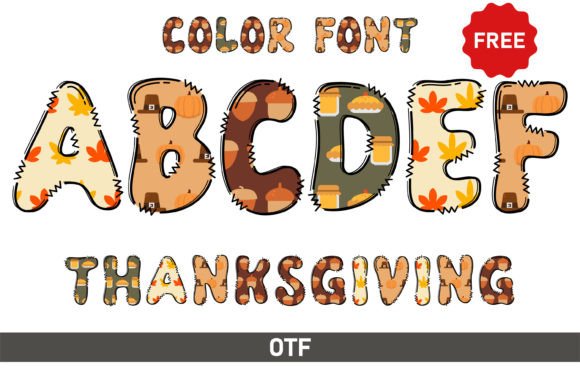
Just as the spirit of Thanksgiving requires the right words, it requires the right visual identity. In design, the choice of font is a strategic decision that conveys personality. For instance, if your brand is launching a Thanksgiving campaign aimed at families or a younger demographic, you might utilize fonts that are whimsical, colorful, and easy to read. These design choices create an engaging experience that mirrors the warmth of the holiday.
However, technical compatibility is just as important as aesthetic appeal. A common mistake in creative operations is selecting a design asset that fails in the execution phase. Consider the analogy of font compatibility: a design may look perfect in concept, but if the file format is not compatible with your production tools—such as Cricut Design Space or other cutting machines—the project stalls.
In business strategy, this translates to "execution friction." A Thanksgiving campaign might have a beautiful message, but if your email marketing platform cannot render the design properly on mobile devices, or if your customer service team is not briefed on the holiday offers, the strategy fails. Ensure that your creative assets, much like compatible OTF or TTF files, work seamlessly across all your operational platforms.
Customer Experience: The Thanksgiving Touchpoint
For service-based businesses and retailers, Thanksgiving offers a unique window to deepen customer relationships. This is not about discounts; it is about the experience. How can you make your customer’s life easier during a stressful time of year?
- Simplify Decisions: Use Thanksgiving content to curate solutions. If you are a B2B provider, offer a "Year in Review" template that saves your clients time. If you are a retailer, offer gift guides that reduce decision fatigue.
- Operational Transparency: If your shipping times or support hours change during the holiday, communicate this clearly and early. Acknowledging the customer's time is a form of gratitude.
- Community Building: Encourage your audience to share their own stories of gratitude. User-generated content campaigns centered around Thanksgiving can boost engagement without requiring a massive ad spend.
Risk Management: Avoiding the "Performative" Trap
There is a significant risk in adopting a Thanksgiving strategy without clear goals: the perception of inauthenticity. Modern consumers and professionals are adept at spotting performative gestures. If your brand has spent the rest of the year ignoring customer feedback or treating employees poorly, a sudden outpouring of Thanksgiving sentiment will ring hollow and may even invite cynicism.
Before launching a Thanksgiving initiative, conduct an internal audit. Ask yourself:
- Alignment: Does this message of gratitude align with our actions throughout the year?
- Context: Are we acknowledging the specific challenges our audience has faced, or are we glossing over them with generic platitudes?
- Value: Are we offering actual value (insight, rest, savings) or just noise?
For freelancers and consultants, this risk is personal. Sending a Thanksgiving note to a client who is currently unhappy with a deliverable can seem tone-deaf. In such cases, it is better to focus on resolution first, using the holiday sentiment only after the professional relationship is stabilized.
Creative Applications: Thanksgiving as a Design Brief
For creators and designers, Thanksgiving can serve as a thematic constraint that sparks innovation. Instead of defaulting to autumn leaves and cornucopias, consider how the feeling of Thanksgiving can be translated into modern design.
Imagine a children's educational brand. To convey a playful or artistic feel, they might use specific typography that is whimsical and colorful. This approach engages young audiences by making the content feel accessible. Similarly, a corporate entity might use clean, serif fonts in their Thanksgiving communications to convey tradition, stability, and trust. The font choice, much like the strategic goal, must match the audience.
Furthermore, consider the "black and white" vs. "color" versions of your assets. In a metaphorical sense, a "black and white" strategy is the baseline—the core message of thanks. The "color" version is the added flair, the specific campaign, the unique design element. Ensure that your baseline strategy is solid (compatible with all scenarios) before adding the colorful, high-complexity elements that may only work in specific contexts.
Decision-Making Framework for Thanksgiving
To use Thanksgiving intentionally rather than randomly, apply this decision-making framework to your planning:
- Define the Objective: Are you aiming for brand loyalty, team morale, lead generation, or community building? Do not attempt to achieve all four with a single initiative.
- Identify the Audience: Tailor your message. A message to investors should focus on stability and long-term vision. A message to customers should focus on service and appreciation.
- Select the Channel: Where does your audience expect to hear from you? A handwritten note may have more impact than an email for high-value clients. A social media campaign might be better for community engagement.
- Measure the Outcome: Plan how you will evaluate success. Did the Thanksgiving campaign lead to increased retention in Q1? Did the team morale boost result in faster project completion?
Long-Term Value: Sustaining the Spirit
The true power of Thanksgiving lies in its sustainability. A one-day event creates a spike; a sustained practice creates a culture. For educators and mentors, this means integrating gratitude into feedback loops. For marketers, it means acknowledging the customer journey year-round.
Consider the "Ultimate Guide" approach to your operations. Just as a comprehensive guide helps users navigate complex software or font usage, a comprehensive approach to gratitude helps navigate complex business relationships. It removes the guesswork and replaces it with a protocol of appreciation.
Ultimately, Thanksgiving is a reminder that business is conducted between humans. By strategically integrating gratitude into your planning, communication, and creative execution, you do not just celebrate a holiday—you build a resilient, human-centric brand that is equipped for long-term success. Use this season to pause, reflect, and recalibrate your approach, ensuring that your next move is not just profitable, but meaningful.