Rabbit Hole Font: A Deep Dive into Its Retro-Modern Appeal for Designers
Choosing the right typeface for a project is rarely a simple task. It’s a decision that balances aesthetic preference with practical function, personality with readability. In the search for a font that delivers both character and impact, the Rabbit Hole display typeface emerges as a compelling contender. It’s a design that doesn’t just sit on a page; it performs, offering a unique blend of playful nostalgia and contemporary boldness. This analysis explores the distinct qualities of Rabbit Hole, its ideal applications, and the important considerations for determining if it’s the right tool for your creative work.
Deconstructing the Distinctive Character of Rabbit Hole
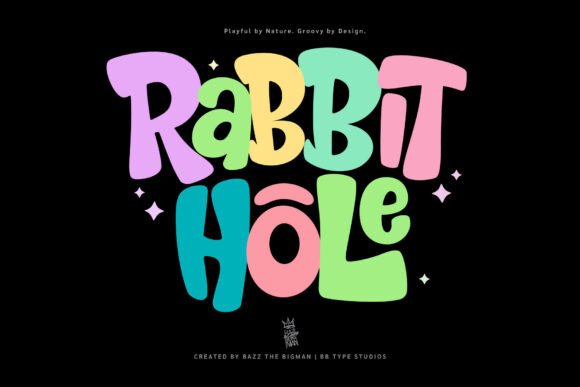
At its core, Rabbit Hole is a bold display font engineered for personality. Its design philosophy intentionally leans into a quirky charm and a lively retro vibe, reminiscent of mid-century children’s book illustrations and vintage advertising. The letterforms possess a hearty, organic structure—think of slightly rounded terminals, uneven baselines, and a subtle, hand-crafted feel. This isn't a geometric sans-serif or a classic serif; it’s a typeface with visible energy.
What sets it apart from many retro-inspired fonts is its modern execution. The exuberant style is balanced with careful kerning and legibility considerations, ensuring it remains functional at scale. The vivacious rhythm it creates is not chaotic but carefully orchestrated, making it feel both inviting and amusing. It’s this combination—the fun facade backed by a solid, intentional design—that gives Rabbit Hole its punch. It’s built to capture and command attention, a critical requirement for any display typeface.
Where Rabbit Hole Shines: Evaluating Ideal Use Cases
The effectiveness of any font is context-dependent. Rabbit Hole is not a universal workhorse for body text; its strengths are magnified in specific, high-visibility scenarios. Evaluating its fit involves matching its inherent personality with the project's goals.
Best-Fit Scenarios
- Children’s Products & Education: This is a natural home for the font. Its playful allure and whimsical quality make it perfect for book titles, educational app interfaces, toy packaging, and branding for children’s entertainment. The lively feel aligns perfectly with themes of imagination and fun.
- Creative Branding & Startups: For brands targeting a youthful, energetic, or artistically inclined audience—think indie bakeries, craft breweries, boutique design studios, or eco-friendly toy companies—Rabbit Hole can inject a distinct personality into logos, wordmarks, and key headlines.
- Event Materials & Merchandise: When the goal is to generate excitement and a festive mood, such as for a music festival poster, a community fair banner, or limited-edition merchandise, the font’s bold and exuberant nature makes it a standout choice. It translates exceptionally well to posters, packaging, and merchandise.
- Editorial & Creative Projects: Magazine spreads, blog headers for creative niches, or album art can benefit from its retro vibe to establish a specific mood or era. It works well for pull quotes and section titles where emphasis is needed.
When to Consider Alternatives
Understanding a font's limitations is as crucial as knowing its strengths. You may need to look beyond Rabbit Hole in the following situations:
- Long-Form Body Copy: Its decorative and bold nature, optimized for display sizes, would hinder readability in long paragraphs. For body text, a neutral sans-serif or serif is essential.
- Corporate or Highly Formal Contexts: The quirky charm might feel out of place in legal documents, financial reports, or luxury branding that relies on minimalist elegance and understated sophistication.
- Projects Requiring Extreme Neutrality: If the design needs to disappear and let imagery or content take absolute precedence, a more subdued typeface would be less distracting.
- Technical or Medical Documentation: Clarity and absolute precision are paramount here, and any stylistic flourish could compromise the message.
Practical Comparisons: How Rabbit Hole Stacks Up
To make an informed choice, it helps to position Rabbit Hole within the broader landscape of display typefaces. It occupies a specific niche, and comparing it to other styles clarifies its unique value.
Against Other Retro Fonts: While many fonts capture a vintage feel, they often lean into a specific decade—1950s diner, 1970s psychedelic, or 1980s geometric. Rabbit Hole’s charm is more timeless retro, less tied to a single era and more focused on a general sense of playful, handcrafted nostalgia. This can make it feel more versatile across different retro-inspired projects.
Against Other "Fun" or "Kid-Friendly" Fonts: The category of playful fonts is vast. Some are overly simplistic, sacrificing design sophistication for overt childishness. Others can be difficult to read. Rabbit Hole’s hearty, organic structure provides a bold presence that avoids looking cheap or amateur. It maintains a level of design integrity that appeals to adults while still delighting children, making it a stronger choice for professional branding in this space.
Against Bold Sans-Serifs: A font like Bebas Neue or Impact also commands attention but through stark, geometric uniformity. They are powerful for headlines but lack the whimsical, organic, and inviting personality of Rabbit Hole. The choice here is between stark modernity and retro-infused warmth.
Making the Decision: Key Factors for Your Project
Ultimately, deciding to use Rabbit Hole comes down to a clear-eyed assessment of your project’s needs. Consider these practical decision factors:
- Brand Personality & Audience: Does your brand voice align with quirky, lively, and inviting? Is your target audience receptive to a playful aesthetic? If the answer is yes, Rabbit Hole is worth serious consideration.
- Application Context: Will the font be used primarily for large-scale headlines, logos, or short, impactful text blocks? If so, its strengths are utilized. If you need it for small text or lengthy sentences, proceed with caution.
- Design Cohesion: Look at your existing design system. Does Rabbit Hole complement your color palette, imagery, and other typographic choices? Its retro vibe can clash with ultra-modern minimalist designs but harmonize beautifully with textured backgrounds and illustration styles.
- Testing and Prototyping: Always test a font in context. Use it in a mockup of your poster, packaging, or webpage. Does it maintain its inviting aura at the intended size? Does it command attention as needed without overwhelming the entire composition?
Rabbit Hole is more than just a novelty. It is a thoughtfully crafted display font that offers a specific and potent combination of retro charm and modern boldness. It excels in projects where injecting personality, energy, and a touch of whimsy is the primary goal. By carefully evaluating its characteristics against your project's specific demands for tone, audience, and application, you can determine if embracing its frolicsome spirit is the key to enhancing your visual storytelling. For the right project, it isn’t just a choice—it’s a catalyst for creating memorable and engaging design.