Status Quo: Mastering the Art of the Modern Handwritten Aesthetic
In the vast and often overwhelming world of typography, finding a typeface that balances elegance with usability can feel like searching for a needle in a haystack. Many designers and content creators find themselves stuck in a cycle of using the same standard sans-serifs or relying on handwritten fonts that look too messy or childish for professional work. However, there is a specific category of font that bridges the gap between casual warmth and sophisticated design: the modern handwritten script. Among the standout options in this category is Status Quo, a typeface that promises to elevate creative projects without sacrificing readability.
This article explores the nuances of the Status Quo font, examining its features, its practical applications, and how it can serve as a valuable asset for everyone from business owners to digital artists. By understanding the mechanics and the aesthetic value of this font, you can determine if it is the right tool to disrupt your current design workflow and enhance your visual communication.
Understanding the Appeal of Modern Handwritten Fonts
Before diving into the specific attributes of Status Quo, it is helpful to understand why handwritten fonts have become so prevalent in modern design. We live in an era of digital saturation. Consumers are bombarded with corporate, rigid, and robotic messaging. As a result, there is a growing hunger for authenticity and the "human touch." Handwritten fonts tap into this psychological need. They suggest that a real person is behind the message, fostering a sense of intimacy and trust that standard print fonts often fail to achieve.
However, the challenge has always been legibility. A font that looks like a doctor’s prescription pad is useless for a website header. A font that looks like a child’s crayon scrawl is inappropriate for a wedding invitation. Status Quo enters the market as a solution to this dilemma. It is designed to be elegant and modern, capturing the fluidity of natural handwriting while maintaining the structure required for clear communication.
The Anatomy of Status Quo
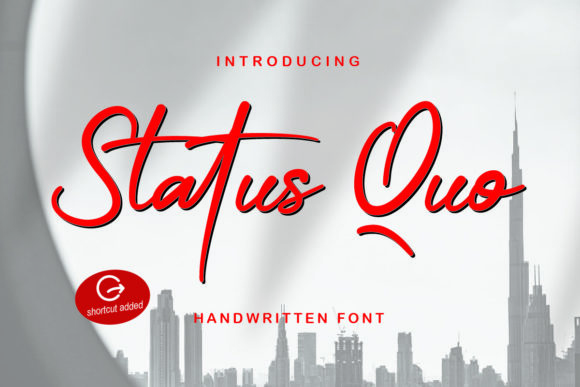
What makes Status Quo distinct? At its core, the font is defined by its flowing lines and balanced kerning. Unlike aggressive brush scripts that can feel chaotic, Status Quo offers a gentle rhythm. The letters connect in a way that mimics natural penmanship, where the hand moves smoothly from one character to the next without heavy lifting. This creates a cohesive look that is easy on the eyes.
Furthermore, the design avoids being overly "trendy" in a way that would date it quickly. It is a modern aesthetic, meaning it utilizes clean curves and consistent stroke weights, but it retains a timeless quality. This ensures that a design created today using Status Quo will still look relevant and stylish five years from now. It is a font that respects the traditions of calligraphy while embracing the demands of contemporary digital design.
PUA Encoding: The Hidden Superpower
One of the most significant technical advantages of Status Quo—and a feature that often goes unnoticed by casual users—is its PUA (Private Use Areas) encoding. For the uninitiated, this might sound like technical jargon, but its practical implications are massive. PUA encoding is essentially a key that unlocks the full potential of the font file.
In many standard fonts, accessing special characters, alternate glyphs, or stylistic swashes requires advanced design software like Adobe Illustrator or Photoshop. If you are using a standard text editor or a basic website builder, you might be stuck with the standard character set. Status Quo, being PUA encoded, ensures that all glyphs and swashes are accessible to the user.
What Does This Mean for Your Workflow?
It means you have creative freedom regardless of your technical skill level or software choice. Whether you are a professional graphic designer or a small business owner using a drag-and-drop website builder, you can access the full library of decorative elements included with Status Quo.
- Accessibility: You can copy and paste special characters directly from a character map tool into your design software.
- Customization: Accessing swashes allows you to customize the start and end of words, giving your text a truly bespoke look.
- Versatility: You can switch between standard letterforms and stylistic alternates to prevent repetition in large blocks of text.
This ease of access transforms Status Quo from a simple font into a comprehensive design toolkit. It empowers creators to achieve professional-level typography without the steep learning curve usually associated with advanced typesetting.
Practical Applications: Where to Use Status Quo
A font is only as good as the context in which it is used. Status Quo is a "wonderful asset" to a font library precisely because of its adaptability. It is not a one-trick pony; it can be applied across a wide range of media and industries.
1. Branding and Logo Design
For businesses looking to project an image of approachability and elegance, Status Quo is an excellent choice for logos. It works particularly well for lifestyle brands, boutique agencies, wellness centers, and creative studios. The font’s modern handwritten style suggests creativity and personal attention to detail. When used in a logo, it can help a brand stand out from competitors who rely on cold, geometric fonts.
2. Wedding Stationery and Event Invitations
The wedding industry relies heavily on the aesthetic of romance and elegance. Status Quo fits this niche perfectly. Its flowing script is ideal for invitations, save-the-dates, and thank-you cards. Because of the PUA encoding mentioned earlier, designers can easily add decorative swashes to the beginning of names or the ends of sentences, adding a touch of luxury to the stationery suite.
3. Social Media and Digital Content
In the fast-paced world of social media, grabbing attention is paramount. Quote graphics, Instagram stories, and Pinterest pins often require a font that is both readable at a glance and emotionally resonant. Status Quo offers the personality needed to make social media posts pop. It pairs beautifully with simple sans-serif fonts (like Montserrat or Roboto), creating a high-contrast visual hierarchy that guides the viewer's eye.
4. Product Packaging
If you are selling physical goods, packaging is your silent salesperson. Status Quo can elevate the perceived value of a product. Imagine this font on a label for artisan coffee, organic skincare, or hand-poured candles. The handwritten style implies that the product is handcrafted or made with care, even if it is mass-produced. It bridges the gap between the product and the consumer, making the item feel personal.
Evaluating Suitability: Strengths and Considerations
While Status Quo is a powerful tool, it is important to approach typography with realistic expectations. No single font can solve every design problem. To get the most out of Status Quo, you must understand its strengths and its limitations.
The Strengths
- Emotional Connection: As discussed, it creates an immediate emotional bond with the viewer. It feels human.
- Readability: Despite being a script font, it maintains high legibility, even at smaller sizes (though testing is always recommended).
- Complete Glyph Set: The inclusion of swashes and alternates makes it a high-value font for the price.
The Considerations
When using Status Quo, or any handwritten font, there are practical limitations to keep in mind:
- Body Text: Do not use Status Quo for long paragraphs of body text. Handwritten fonts are taxing on the eyes when read in large blocks. They are best used for headers, sub-headers, pull quotes, and short call-to-action phrases.
- Contrast is Key: If the background is busy or textured, the thin strokes of the font might get lost. Ensure there is sufficient contrast between the text color and the background.
- Pairing: Status Quo needs a partner. It rarely works well in isolation. Pair it with a clean, neutral sans-serif for the body text to let the handwritten font shine as the accent.
Tips for Integrating Status Quo into Your Projects
If you are ready to add Status Quo to your workflow, here are some actionable steps to ensure success:
- Define the Hierarchy: Decide exactly where the font will appear. Use it for the "Hero" text—the main headline of your page or the main message on your flyer.
- Experiment with Swashes: Don't just settle for the default letters. Open your character map and look for the alternate versions of 'h', 't', 's', and 'g'. These often have beautiful loops or tails that can add flair to your design.
- Check the Spacing: Depending on the software you are using, you may need to adjust the tracking (space between letters). Handwritten fonts sometimes benefit from slightly looser spacing to prevent the letters from crashing into one another.
- Test for Mobile: If you are using Status Quo for a website, always test how it looks on a mobile phone. A font that looks elegant on a desktop monitor might look illegible on a small screen if the size is too small.
Conclusion: A Valuable Addition to Any Creative Arsenal
In summary, Status Quo is more than just a collection of letters; it is a design solution. It addresses the modern need for authenticity, elegance, and ease of use. By offering a comprehensive set of glyphs through PUA encoding, it removes technical barriers, allowing creators to focus on what matters most: the message.
Whether you are a professional designer looking for a reliable script font or a business owner trying to inject some personality into your brand, Status Quo offers a robust set of features. It proves that you don't need to sacrifice sophistication for a handwritten look. With its modern aesthetic and practical versatility, Status Quo is poised to become a staple in your font library, ready to enhance your next creation with a touch of human elegance.