The Art of the Handwritten Word: Why Typography Like Satori Captivates Modern Audiences
In the vast digital landscape, where sans-serifs dominate screens and serifs rule printed books, there exists a distinct emotional gap that only a specific category of typography can fill. This gap is the longing for the human touch—the imperfections, the flow, and the intimacy of a signature or a personal note. While the world has moved toward uniformity and pixel-perfect precision, the most effective communicators understand that true connection often lies in the organic. This is where the artistry of handwritten fonts comes into play, serving as a bridge between the mechanical nature of digital devices and the warmth of human expression.
The evolution of typography has always been a reflection of the technology used to create it. From chiseling stone to pressing ink, and finally to typing on a keyboard, the medium dictates the message. However, in the current era of design, there is a deliberate movement to reclaim the personality that was often lost in the transition to digital. Designers and content creators are increasingly turning to typefaces that mimic the fluidity of ink on paper. These fonts do more than just display text; they convey a mood, a personality, and a level of authenticity that rigid geometric shapes cannot replicate.
The Anatomy of Elegance: Understanding Curves and Flow
To appreciate the impact of a typeface like Satori, one must understand the mechanics of what makes a handwritten font successful. It is not merely about making letters look "messy" or "casual." True mastery in script typography lies in the balance between legibility and personality. The defining characteristics of high-quality script fonts are well-rounded letters and a distinct flow that guides the eye naturally from one character to the next.
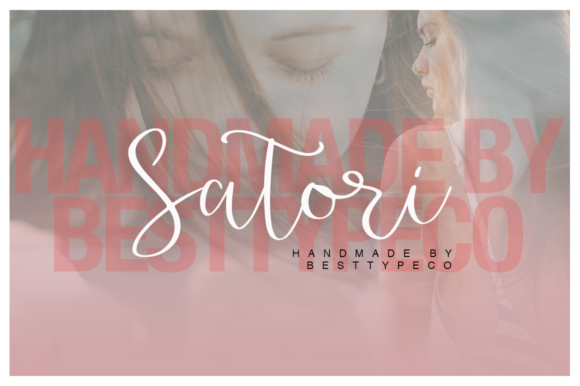
When we look at a font such as Satori, we see a deliberate emphasis on the cursive tradition. The letters are not isolated units; they are part of a continuous movement. This creates a rhythm in the text that subconsciously relaxes the reader. Unlike rigid block letters that demand attention through force, cursive fonts invite the reader in through elegance. The "well-rounded" nature of such typography ensures that even at smaller sizes, the characters do not collapse into illegibility. This structural integrity is what separates a "masterpiece" font from a novelty typeface. It allows the font to be versatile—functional enough for short paragraphs but decorative enough for headlines.
Psychological Triggers: Why We Prefer the "Human" Touch
The effectiveness of handwritten typography is not just an aesthetic preference; it is rooted in psychology. In a world saturated with automated responses and AI-generated content, audiences are becoming hyper-aware of what feels "real." A perfectly geometric font can sometimes feel cold or corporate. In contrast, a cursive typeface signals effort, care, and personalization.
Consider the difference between receiving a typed label on a package and receiving one with a handwritten address. The handwritten version immediately implies that a human being took the time to address it personally. Satori and similar fonts leverage this psychological trigger in the digital realm. By using a font that mimics the irregularities and flow of human handwriting, designers can soften the hard edges of technology. This is particularly vital in sectors like wellness, hospitality, and artisanal crafts, where the relationship between the seller and the buyer is paramount.
Strategic Applications: Where Typography Meets Function
The versatility of a font like Satori allows it to be deployed across a wide variety of industries and mediums. Understanding where and how to use such a typeface is crucial for maintaining professional standards while embracing creative flair.
Branding and Identity
For small businesses, freelancers, and startups, the logo is the first point of contact. A handwritten font can serve as the cornerstone of a brand identity that values approachability and creativity. It suggests that the business is nimble, creative, and customer-centric. However, it is essential to ensure that the chosen font aligns with the brand's voice. A cursive, elegant script like Satori is perfectly suited for boutique agencies, lifestyle blogs, or high-end fashion labels where sophistication is key.
Wedding and Event Stationery
One of the most traditional applications for cursive typography is in the realm of events. From wedding invitations to gala programs, the font sets the tone for the occasion before the event even begins. A distinct and well-rounded script communicates formality mixed with romance. It transforms a simple piece of paper into a keepsake. In this context, the font is not just a tool for reading; it is a decorative element that contributes to the overall atmosphere of the event.
Digital Marketing and Social Media
In the fast-scrolling environment of social media, capturing attention is difficult. Static, standard fonts often blend into the background. A unique handwritten font can break the visual monotony. When used for quotes, callouts, or overlay text on images, a font like Satori adds a layer of texture and interest. It makes the content feel more like a personal message from the creator rather than an automated ad. This can lead to higher engagement rates, as users are more likely to stop and read text that feels personal and authentic.
The Creator’s Workflow: Integrating Script Fonts Seamlessly
For designers and creators, adopting a new typeface into their workflow requires an understanding of technical compatibility and aesthetic pairing. A font is rarely used in isolation; it is almost always part of a typographic hierarchy. This hierarchy usually involves a headline font (display), a body font, and an accent font.
A versatile script like Satori typically shines as an accent or headline font. Because of its intricate detailing, it can be taxing on the eyes if used for long blocks of body text. The best practice is to pair it with a clean, neutral sans-serif or a traditional serif for the main content. For example, using Satori for the main title of a poster or the header of a website, and pairing it with a font like Roboto or Georgia for the description, creates a beautiful contrast. The organic curves of the script play off the rigid structure of the body text, creating a visual balance that is pleasing to the eye.
Furthermore, the "incredibly versatile style" of such fonts allows them to adapt to different color palettes and backgrounds. Whether placed over a busy photograph or a solid color block, a distinct handwritten font maintains its presence. Creators must pay attention to kerning (the space between letters) and leading (line spacing) when working with cursive fonts to ensure the loops and tails of the letters do not collide, which can ruin the legibility of the design.
Trends in Typography: The Return of the Artisan
Design trends are cyclical. For years, the trend moved toward minimalism, flat design, and ultra-clean lines. However, we are currently witnessing a shift toward "Neo-Artisan" design. This trend embraces textures, grain, and imperfect lines. It is a reaction against the sterility of the digital world. Handwritten fonts are a central pillar of this movement.
This does not mean that typography is becoming less professional. On the contrary, the quality of script fonts has risen dramatically. The days of jagged, unrealistic script fonts are largely over. Modern fonts like Satori are crafted with vector precision that mimics the natural pressure variations of a pen or brush. They offer the "look" of the artisan with the scalability and clean edges required for professional printing and high-resolution screens. This blend of analog aesthetics and digital precision defines the current state of typography.
Practical Considerations for Implementation
While the aesthetic appeal of a font like Satori is undeniable, there are practical considerations that professionals must keep in mind. The primary concern is always legibility. A font can be beautiful, but if the audience cannot read the message quickly, the design has failed. This is particularly true for signage, user interfaces, and accessibility-focused design.
When selecting a cursive font for a project, it is advisable to test it at the intended size. A font that looks magnificent on a large print banner may become an unreadable blob on a mobile screen. Designers should look for fonts that offer distinct letterforms—where the 'a' does not look like an 'o', and the 'l' does not look like an 'e'. The description of Satori as having "well rounded letters" suggests that it has been designed with this legibility in mind, making it a safer choice for diverse applications compared to more abstract or overly flourished scripts.
Conclusion: The Timeless Appeal of the Written Word
Typography is the voice of design. While the words convey the meaning, the font conveys the emotion. In an era where digital communication can often feel devoid of personality, the use of cursive, handwritten fonts offers a vital lifeline to human connection. They remind us that behind every screen, there is a creator, a writer, or a business owner trying to speak directly to us.
The enduring popularity of fonts like Satori is a testament to our collective appreciation for beauty, craftsmanship, and individuality. Whether used in a high-stakes corporate rebrand or a personal passion project, the right script font elevates the content from mere information to an experience. By mastering the balance between style and function, creators can use these tools to design works that are not only seen but truly felt.