Evaluating the Army Camouflage Font for Modern Design Projects
In the search for distinctive typography, designers often move beyond standard sans-serifs and serifs to find assets that provide a specific texture or mood. Among these, the Army Camouflage font stands out as a thematic choice. It is not merely a typeface that mimics stencil lettering; it incorporates an active camouflage pattern directly into the glyph design. This article evaluates the practical utility, technical specifications, and creative applications of the Army Camouflage font, specifically analyzing its compatibility with various design software and cutting machines.
Understanding the Visual Characteristics
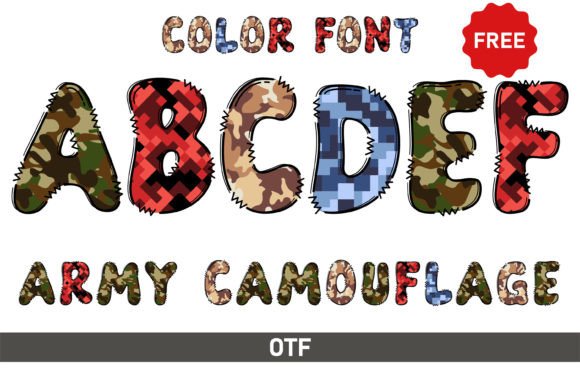
The primary appeal of Army Camouflage lies in its visual complexity. The font renders letters using a pattern that resembles military fatigues—typically featuring greens, browns, and tans. This creates a textured appearance that is difficult to replicate manually without vector manipulation. For professionals in branding or merchandise, this offers a way to achieve a "distressed" or "thematic" look instantly.
However, it is important to distinguish this font from standard vector outlines. Because the camouflage pattern is integrated into the font file (specifically in color versions), the result is a rasterized or complex vector image depending on the file format. The aesthetic is undeniably strong for specific niches, including outdoor sports branding, tactical gear labeling, and event materials for activities like airsoft or paintball. The visual weight of the font makes it a poor choice for body text but a compelling option for headers and logos.
Technical Compatibility: A Critical Distinction
When evaluating the Army Camouflage font, the most critical factor for users is understanding the difference between its color and monochromatic versions. The font package typically includes two distinct variations, and their compatibility with design software varies significantly.
The Color Version
The full-color version of the font displays the camouflage pattern in multiple colors. This version is designed for high-end graphic design software. It is compatible with:
- Adobe Photoshop
- Adobe Illustrator
- Silhouette Studio (Designer Edition or higher)
- Inkscape
It is important to note that the OTF and TTF files of the color version are not compatible with Cricut Design Space. Users attempting to upload these files to Cricut will likely encounter errors or see only the outline without the fill pattern. This is a technical limitation of how the Cricut software processes font files rather than a flaw in the font itself.
The Black Version
For users of cutting machines, the black version of the font is the viable solution. This version flattens the camouflage pattern into a single color (black), making it a standard vector outline. This iteration is fully compatible with Cricut Design Space and other basic cutting software. While it loses the color variation, it retains the complex silhouette of the letters, allowing for effective cutting of vinyl, cardstock, or heat transfer material.
Practical Application and Workflow Considerations
For the target audience—marketers, freelancers, and small business owners—the workflow implications are significant. If the end goal is a printed product, such as a poster or a digital banner, the color version in Photoshop or Illustrator is the optimal choice. The font allows for rapid prototyping of designs that would otherwise require overlaying a texture mask on standard text.
Conversely, for physical products like t-shirts or decals using a Cricut machine, the workflow requires a decision point. The designer must decide if the multi-color camouflage effect is necessary. In many cases, cutting a camouflage pattern into vinyl is actually counter-productive; the intricate edges can make weeding (removing excess vinyl) extremely difficult. Therefore, using the black version to cut a silhouette of the text, and then using a separate camouflage patterned vinyl, is often a more professional and durable method for physical manufacturing.
Target Audience and Use Cases
The utility of Army Camouflage extends beyond simple decoration. It serves as a functional asset for specific demographics:
- Event Organizers: Creating invitations for themed parties, such as stag dos or military appreciation events.
- Content Creators: Designing YouTube thumbnails or social media graphics for channels focused on survival gear, hiking, or gaming (specifically FPS genres).
- Educators and Parents: Creating materials for children who have an interest in nature or adventure. The playful nature of the pattern works well for birthday cards or scrapbook elements.
- Small Business Owners: Specifically those in the outdoor sector who need quick branding elements for signage.
The font excels in situations where the message needs to be communicated quickly and visually. It is less effective in corporate environments where legibility and professionalism are paramount. The "playful" aspect mentioned in the font's description is accurate; it conveys a sense of fun and adventure rather than strict military authority.
Limitations and Realistic Expectations
While the Army Camouflage font is a strong stylistic asset, users should manage expectations regarding its flexibility. The primary limitation is legibility. At small sizes, the intricate details of the camouflage pattern can merge, making the text difficult to read. It performs best at larger display sizes.
Furthermore, the color version is static. Unlike a vector overlay where you can change the camouflage colors to match a specific brand palette (e.g., desert tan or urban grey), the colors embedded in the font file are fixed. To alter the color scheme, one would need to convert the text to outlines or shapes and manually adjust the colors, which negates some of the convenience of using a font.
Conclusion
The Army Camouflage font is a specialized tool rather than a general-purpose typeface. Its value lies in its ability to instantly apply a complex thematic texture to a design. For digital creators using Photoshop or Illustrator, it offers a significant time-saving benefit. For Cricut users, the black version provides a solid foundation for creating custom decals, provided they understand the limitations regarding color complexity.
Ultimately, this font is a practical addition to a designer's library if the project calls for a rugged, adventurous, or playful aesthetic. It bridges the gap between standard typography and textured illustration, making it a useful resource for hobbyists and professionals alike who operate within the outdoor, tactical, or children's entertainment sectors.